
For home health and hospice clinicians, the car is part of the workplace, and home health driving safety is part of the job. Between visits, you might drive across town, down country roads, and into neighborhoods you have never seen before, sometimes several times a day.
All that time on the road adds up. Home health clinicians often drive far more than a daily commute, which makes driving safety just as important as clinical skills.
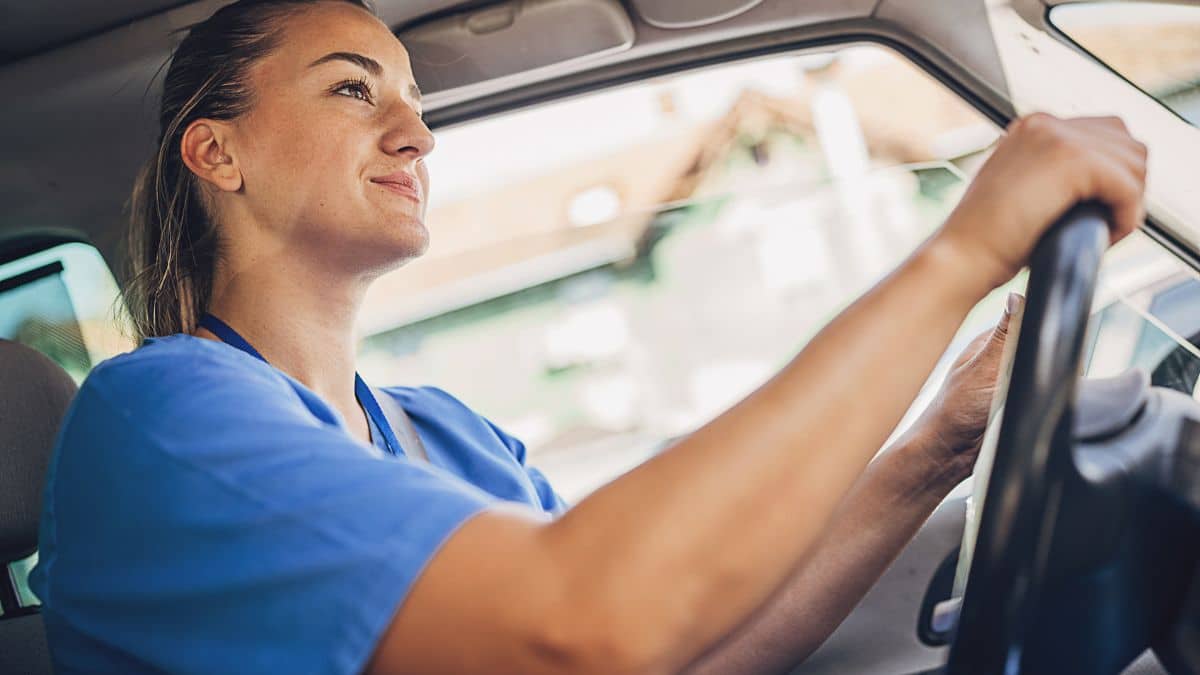
The good news? Most driving risks come down to habits you can control. Here are practical, road-tested tips to help you arrive at every visit safe, focused, and ready to care for your patients.
Stay Focused: Put Distractions in the Back Seat
Distracted driving is any activity that pulls your attention away from the road, from texting to eating to adjusting the radio (National Highway Traffic Safety Administration [NHTSA], n.d.-a). In 2024, distracted driving killed 3,208 people in the United States (NHTSA, n.d.-a).
It only takes a moment. Reading or sending a text takes your eyes off the road for about five seconds. At 55 mph, that is like driving the length of a football field with your eyes closed (NHTSA, n.d.-a).
For clinicians, the temptation is real: a schedule change, a message from the office, a quick bite between visits. Try these habits:
- Set up before you roll. Enter your next address and start your music or podcast before you shift into drive.
- Go hands-free. Use hands-free devices for calls and navigation, and let texts wait.
- Eat at the curb, not on the road. Save meals and coffee for when you are parked.
- Leave the controls alone. Adjust mirrors, seats, and climate before you leave.
- Keep your eyes moving. Scan mirrors and stay aware of pedestrians, cyclists, and kids, especially in residential areas.
Stay Rested: Don’t Let Fatigue Take the Wheel
Long days, early starts, and back-to-back visits can leave anyone running on empty. Drowsy driving was linked to 644 deaths in 2024 (NHTSA, n.d.-b). Drowsy-driving crashes happen most often between midnight and 6 a.m. and in the late afternoon, when your body’s natural rhythm dips (NHTSA, n.d.-b). That late-afternoon slump often lines up with the last visits of the day.
Ongoing exhaustion can also be a sign of something bigger. Our post on understanding burnout in home health shares how to recognize it.
To stay sharp:
- Protect your sleep. NHTSA recommends 7 to 8 hours a night.
- Take breaks. Build short pauses into your route. Stretch, hydrate, and reset between visits.
- Limit late-night driving whenever your schedule allows.
- Fuel up the right way. Regular meals and plenty of water help you stay alert.
- Understand your own medications. You know better than most which medications can cause drowsiness. Give your own prescriptions and over-the-counter meds the same attention you’d give a patient’s before you get behind the wheel.
- Pull over if you’re fading. If you feel drowsy behind the wheel, stop somewhere safe. Coffee and a 20-minute nap can help for a short time, but they don’t replace real sleep (NHTSA, n.d.-b).
Keep Your Car Visit-Ready
Your car is your mobile office, supply closet, and break room. Treat it that way, because home health driving safety starts before you turn the key. The National Institute for Occupational Safety and Health (NIOSH, 2012) recommends that home health workers keep their vehicles maintained and carry an emergency kit.
Before you drive:
- Keep up with regular maintenance.
- Do a quick walk-around. Look for low tires or anything damaged.
- Consider keeping a portable tire inflator in the trunk.
- Always buckle up.
Pack an emergency kit with a flashlight, extra batteries, flares, a blanket, water, and a phone charger.
Organize your supplies. Keeping medical supplies in the trunk cuts clutter and distractions up front. Clear bins, labeled bags, or a trunk organizer make it easy to grab what you need at each visit. Keep clean and dirty items in separate containers to prevent cross-contamination.
Patient on Your Mind? Pull Over First
You care about your patients, so it’s natural to keep thinking about the last visit or worry about the next one. But a mind on a patient issue isn’t fully on the road.
- Park before you problem-solve. If you need to call a physician or allowed practitioner, pull over somewhere safe first. NIOSH (2012) advises stopping the vehicle before using a phone.
- Running late? Call, don’t speed. Pull over, let your patient know, and reschedule if you need to. Patients would much rather wait a few minutes than have you rush.
- Take a breath between visits. A minute in the driveway to reset after a tough visit is time well spent.
Calling about a patient who seems different than usual? Our guide to change of condition warning signs in home health covers what to watch for and when to escalate.
Keep Your Cool With Aggressive Drivers
You can’t control how other people drive, but you can control how you respond. NIOSH (2012) lists aggressive driving among the main road hazards for home health workers. When someone is tailgating, weaving, or honking:
- Stay calm and don’t take it personally.
- Don’t engage. Avoid eye contact and gestures.
- Give them space. Don’t tailgate, and be ready to brake if they cut in front of you.
- Let them pass. Pull over when it’s safe if you feel uneasy.
- Head somewhere public if you think you’re being followed. A busy, well-lit area or a police station is a good choice.
No appointment is worth a confrontation on the road.
New Patient, New Neighborhood
Admissions often take you to places you’ve never been. A little planning makes a new route feel routine. NIOSH (2012) recommends planning your route before you leave.
- Always use GPS, even if you think you know the way.
- Stay connected. Keep a car charger handy, and consider a mobile hotspot if you work in areas with spotty service.
- Park smart. Choose well-lit spots close to the home.
- Lock up and leave valuables at home. Keep your doors locked and keep anything you don’t need out of sight.
- Trust your instincts. If something feels off, leave and call for help.
Safety doesn’t stop at the curb. Our post on workplace violence prevention for home health covers staying safe once you’re inside a patient’s home.
Be Weather-Ready
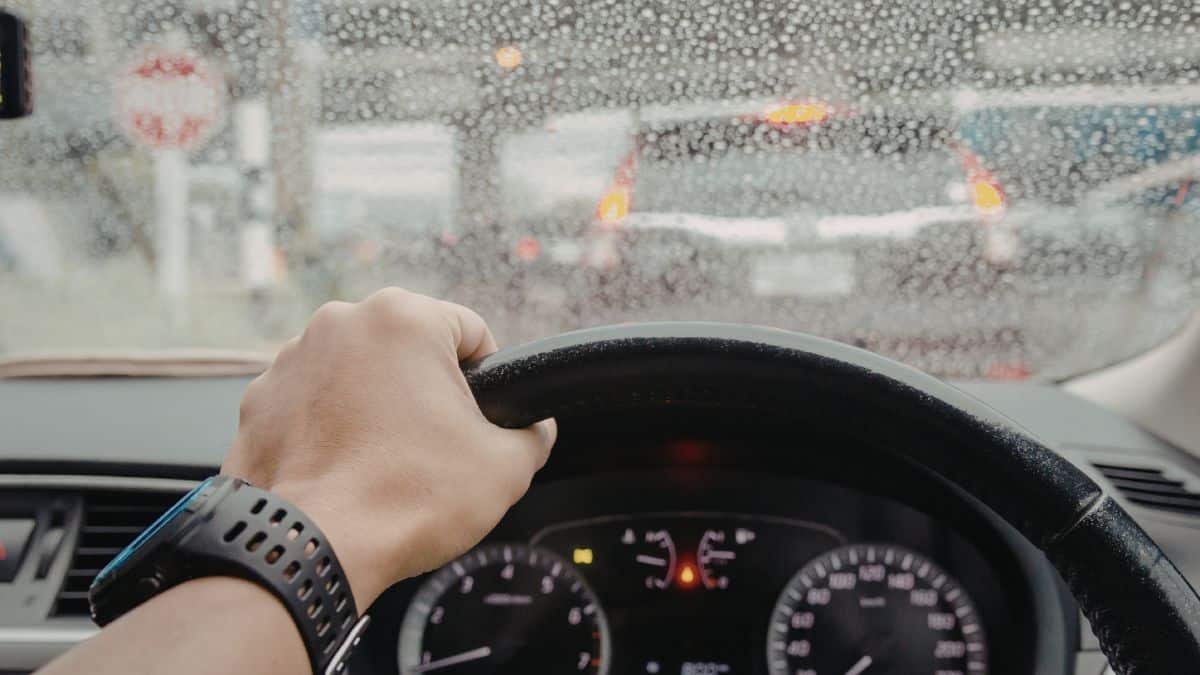
Bad weather doesn’t stick to a season anymore, and patients still need care. The National Weather Service (NWS) notes that more than 5,000 people die on U.S. roads each year because of weather conditions (NWS, n.d.-c). The best plan is to avoid driving in severe weather when you can and to follow your agency’s policies.
When you do have to drive in bad weather:
- Buckle up, slow down, and leave extra room between you and the car ahead.
- Turn on your headlights.
- Take extra care at intersections.
- Tell someone your route, and keep your phone charged (NWS, n.d.-c).
Quick guide for severe weather:
| Situation | What to do |
|---|---|
| Flooded roads | Turn around, don’t drown. Never drive around barriers or into flood water. Just 12 inches of rushing water can carry away most cars, and 2 feet can carry away SUVs and trucks (NWS, n.d.-a). |
| Tornado warning | Drive to the closest shelter if you can. If you can’t, either get down in your car and cover your head, or leave the car for a low-lying area such as a ditch (NWS, n.d.-b). |
| Earthquake | Pull over and stop in a clear area away from buildings, trees, overpasses, and utility wires (Federal Emergency Management Agency [FEMA], n.d.). Stay in the car until the shaking stops, then watch for damaged roads and bridges (NIOSH, 2012). |
| Hurricane | Follow local emergency officials, and if you’re told to evacuate, go right away. Keep your phone charged with a backup charger, and keep medication and supplies in your trunk (FEMA, 2026a). Before the storm, fuel up and check your tires. On the road, watch for fallen branches and power lines. |
| Wildfire | Watch emergency and air quality alerts, and evacuate immediately if authorities tell you to. Keep an N95 mask, a first aid kit, and a backup charger in your trunk. Be careful carrying flammable products in a hot car, such as aerosols, rubbing alcohol, and hand sanitizer (FEMA, 2026b). If you’re driving near smoke, roll up your windows, close the air vents, and turn on your headlights. Avoid parking near heavy trees or brush. |
| Snow and ice | Slow down and clear all snow and ice from your car before you go. If you skid, steer in the direction you want the front of the car to go. If you get stranded, stay in your vehicle (NWS, n.d.-c). |
Final Thoughts on Home Health Driving Safety
You take great care of your patients. Taking care of yourself on the way to them matters just as much. Small habits add up: the phone set before you shift into drive, the five-minute break, the organized trunk, the call to say you’re running late.
For more ways to make every visit go smoothly, read Home Visits: Tips Before, After, and During.
Agency leaders: safe driving habits stick best when they’re part of regular training. Learn why ongoing training matters in home health care and how microlearning fits busy clinicians’ schedules.
Get to know your organization’s policies and procedures, including what to do if you’re ever in an accident while working. Then buckle up, take a breath, and enjoy the drive.
This post draws on Intuitive Learning Solutions’ Driving Safety course for home health and hospice clinicians. It is for educational purposes only and does not replace your organization’s policies or guidance from local emergency officials.
References
Federal Emergency Management Agency. (n.d.). Earthquakes. Ready.gov. Retrieved October 1, 2026, from https://www.ready.gov/earthquakes
Federal Emergency Management Agency. (2026a, September 24). Hurricanes. Ready.gov. https://www.ready.gov/hurricanes
Federal Emergency Management Agency. (2026b, August 11). Wildfires. Ready.gov. https://www.ready.gov/wildfires
National Highway Traffic Safety Administration. (n.d.-a). Distracted driving dangers and statistics. Retrieved October 1, 2026, from https://www.nhtsa.gov/risky-driving/distracted-driving
National Highway Traffic Safety Administration. (n.d.-b). Drowsy driving: Avoid falling asleep behind the wheel. Retrieved October 1, 2026, from https://www.nhtsa.gov/risky-driving/drowsy-driving
National Institute for Occupational Safety and Health. (2012). Fast facts: How to prevent driving-related injuries (DHHS NIOSH] Publication No. 2012-122). U.S. Department of Health and Human Services, Centers for Disease Control and Prevention. [https://www.cdc.gov/niosh/docs/2012-122/
National Weather Service. (n.d.-a). Turn around don’t drown. National Oceanic and Atmospheric Administration. Retrieved October 1, 2026, from https://www.weather.gov/safety/flood-turn-around-dont-drown
National Weather Service. (n.d.-b). What to do during a tornado. National Oceanic and Atmospheric Administration. Retrieved October 1, 2026, from https://www.weather.gov/safety/tornado-during
National Weather Service. (n.d.-c). What to do if you’re caught in a winter storm. National Oceanic and Atmospheric Administration. Retrieved October 1, 2026, from https://www.weather.gov/safety/winter-during
All content available on or through the website is intended solely as a general educational aid for informational purposes only. It is not medical or healthcare advice, and it is not to be used for medical diagnosis or treatment. It is not a substitute for professional advice and services from a physician (or other qualified healthcare provider,) always seek the advice of a patient’s physician (or other qualified healthcare provider) regarding any medical condition and before changing a treatment or starting any new treatment.
If you suspect an urgent medical problem or condition, contact a qualified healthcare professional immediately. If you are in the United States and a patient is experiencing a medical emergency, they should call 911 or the local emergency line. Please take note of the date provided at the end of any text or documents contained on the Website. Ongoing advancements in scientific, medical, healthcare, technology, and other related fields may outdate or alter the overall usefulness and accuracy of the content.