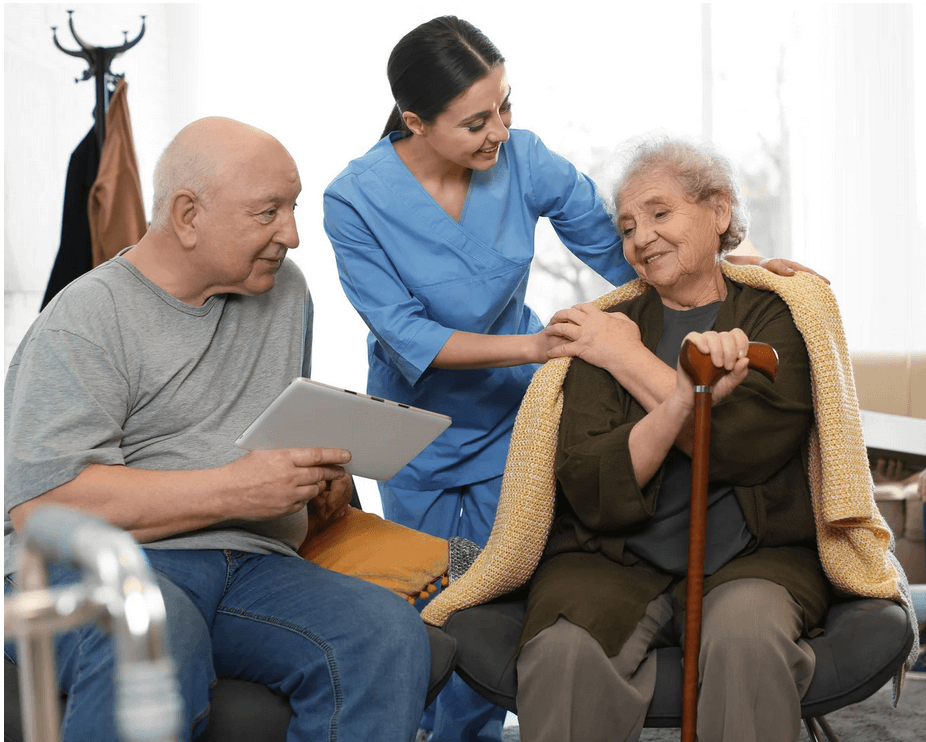
Hospice care represents a collaborative partnership between healthcare professionals and family members, designed to provide compassionate, dignified end-of-life support.
Unlike traditional medical models where families observe from the sidelines, hospice actively integrates loved ones into every aspect of care planning and delivery.
Research shows that actively engaging family caregivers in decision-making, care planning, and symptom management improves quality of care for both dying patients and their loved ones.
The hospice team: Partners in family-centered care
Hospice care operates through an interdisciplinary team model that brings together medical professionals, social workers, chaplains, volunteers, and family members. Each team member contributes specialized expertise while maintaining constant communication to ensure seamless, coordinated support.
Core hospice team members include:
- Hospice medical director: Oversees overall treatment strategies and ensures care goals align with patient wishes
- Registered nurses: Regularly assess patient condition, monitor symptoms, and coordinate services among team members
- Social workers: Provide emotional support, facilitate access to community resources, and assist with advance care planning
- Chaplains: Offer spiritual guidance aligned with patient beliefs and address existential concerns
- Home health aides: Assist with daily personal care tasks like bathing, dressing, and household activities
- Volunteers: Provide companionship, emotional support, and light assistance
- Family caregivers: Serve as the patient’s primary support system and collaborate with professionals on daily care delivery
This team-based approach addresses the physical, emotional, spiritual, and social dimensions of end-of-life care comprehensively. Organizations can strengthen their interdisciplinary collaboration through hospice care training that emphasizes team coordination.
Initial assessment and care plan development
Effective family coordination begins at hospice admission. The hospice team conducts a comprehensive initial assessment that evaluates not only the patient’s medical condition but also family dynamics, caregiver capacity, home environment, and cultural preferences.
Following assessment, the team collaboratively develops an individualized care plan tailored to specific needs. This plan covers symptom management protocols, comfort measures, emotional and spiritual support strategies, and clearly defined roles for both professionals and family members.
Critically, families participate actively in care plan development rather than simply receiving instructions. This collaborative approach ensures the plan reflects what matters most to patients and their loved ones while respecting cultural traditions and personal values. Regular updates occur at least every 15 days to adapt to changing conditions and needs.
Communication strategies that support families
Clear, consistent communication forms the foundation of effective hospice-family coordination. Family caregivers serve as the primary liaison between the patient and medical team, reporting changes in condition, asking questions, and advocating for patient preferences.
Structured communication practices include:
- Interdisciplinary Group (IDG) meetings where team members discuss each patient’s status and coordinate interventions
- 24/7 phone access to registered nurses who can answer questions and dispatch urgent visits when needed
- Regular scheduled visits to assess the patient, educate caregivers, and provide hands-on care
- Detailed documentation that prevents confusion when multiple family members share caregiving responsibilities
For organizations seeking to improve communication protocols, psycho-social interventions training can strengthen staff capacity for sensitive family conversations.
| Communication tool | Purpose | Frequency |
| IDG meetings | Care plan review and coordination | Weekly or bi-weekly |
| Nurse visits | Assessment and education | 2-4+ times weekly |
| 24/7 phone line | Urgent questions and support | As needed |
| Care plan updates | Adapt to changing needs | Every 15 days minimum |
Education and training for family caregivers
Most family members have no prior medical training yet suddenly face responsibilities like medication administration, symptom monitoring, and personal care tasks.
Hospice teams address this gap through comprehensive caregiver education tailored to each family’s needs.
Training topics typically include:
- Medication management: Proper dosing schedules, administration techniques, and safe storage
- Symptom recognition: Identifying signs of pain, anxiety, breathing difficulties, or other distress
- Personal care techniques: Safe transfers, bathing, positioning, and skin care
- Equipment use: Operating oxygen concentrators, hospital beds, or other medical devices
- When to call the hospice team: Recognizing changes that require professional assessment
Education occurs through multiple methods including hands-on demonstrations during visits, written materials, video resources, and telephone guidance. Organizations can enhance their educational approaches by incorporating microlearning for busy clinicians principles that deliver information in digestible segments when families need it most.
Emotional and spiritual support
The emotional toll of watching a loved one decline is profound. Hospice coordination extends beyond medical care to comprehensive emotional and spiritual support for both patients and families.
Social workers provide counseling, help navigate complex feelings about death and dying, facilitate family meetings to resolve conflicts, and connect families with community resources. They also assist with practical concerns like advance directives, financial assistance programs, and funeral planning.
Chaplains offer spiritual care that respects each family’s beliefs and traditions. Whether providing prayer, religious rituals, existential conversations, or simply compassionate presence, chaplains address the spiritual dimension of end-of-life experiences.
Medication management and symptom control
Effective symptom management is central to hospice care, and family caregivers often administer medications under hospice team supervision. This coordination requires clear protocols, thorough education, and ongoing monitoring.
Hospice nurses:
- Develop medication schedules that balance symptom control with ease of administration
- Educate families about each medication’s purpose, dosing, and potential side effects
- Provide medications in accessible formats such as liquid forms for patients who cannot swallow pills
- Monitor effectiveness and adjust regimens based on family reports of symptoms
- Establish protocols for breakthrough symptoms like pain or anxiety that require immediate intervention
Organizations can reduce medication errors through robust training programs and systematic approaches detailed in resources on home health compliance errors.
Training staff for effective family coordination
Hospice organizations must invest in staff development to ensure every team member can coordinate effectively with families. This requires skills beyond clinical competence – including communication, cultural sensitivity, conflict resolution, and emotional intelligence.
Organizations can strengthen staff capabilities through hospice ongoing training programs that address both clinical skills and family coordination competencies.
Ongoing education keeps staff current with best practices and emerging research about family engagement. Programs incorporating courses on specialized topics supplement internal training and provide recognized credentials that enhance staff expertise.
Improve your hospice family coordination
How hospice coordinates with families and caregivers determines whether end-of-life care truly honors patients’ wishes while supporting those they love. Effective coordination requires comprehensive team training, robust communication systems, adequate resources, and unwavering commitment to partnership with families.
Many hospice organizations struggle with inconsistent family communication, inadequate caregiver education, or staff who lack skills for navigating complex family dynamics. These challenges compromise care quality and family satisfaction while increasing the risk of caregiver burnout and poor outcomes.
Intuitive Learning Solutions specializes in developing comprehensive training programs that strengthen hospice staff capabilities for family coordination. Our resources address communication skills, caregiver education techniques, cultural competency, and systematic approaches to family-centered care that exceed regulatory requirements.