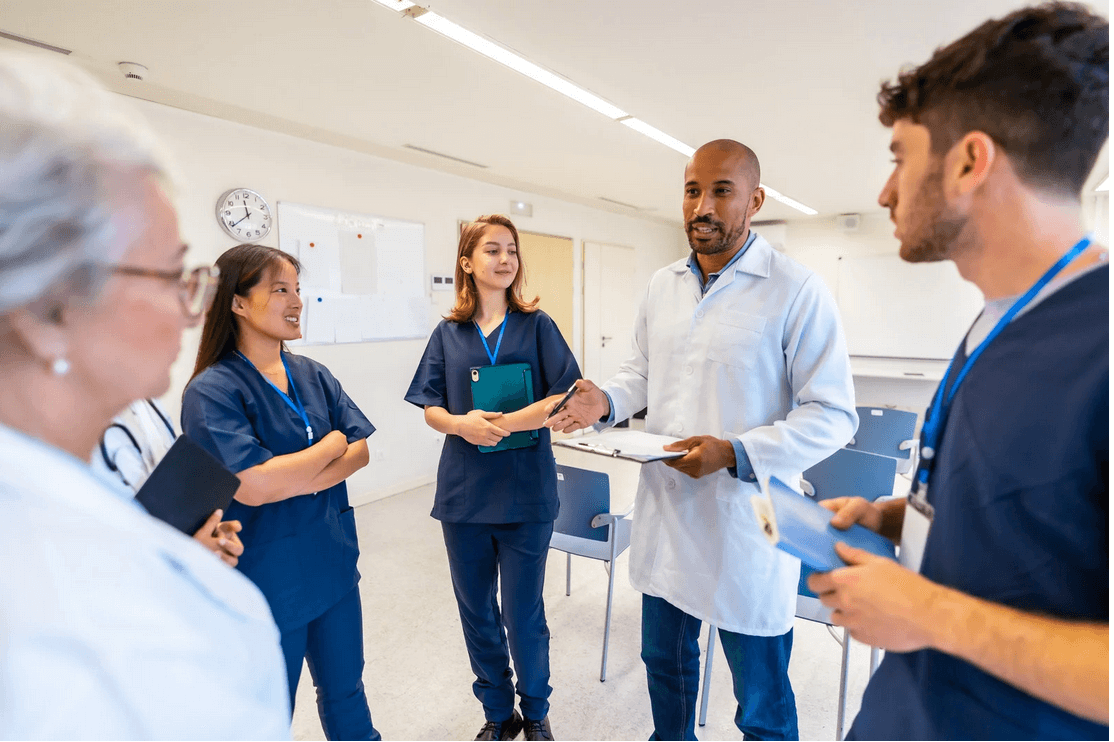
Effective healthcare depends on strong, collaborative care teams who can coordinate, support, and inspire one another in high-stress environments.
As the complexity of medical care grows, interdisciplinary teamwork is essential for safety, quality, and positive outcomes. Creating a robust team environment requires strategic leadership, ongoing education, and a culture of open communication and respect.
Why strong care teams matter
Healthcare teams face intricate challenges: rapid technological change, diverse patient needs, and rising rates of staff burnout and turnover.
Studies have shown that poor teamwork and communication are direct contributors to medical errors, workplace stress, and employee dissatisfaction. In contrast, high-performing care teams lead to:
- Improved patient outcomes
- Lower staff turnover and burnout
- Higher patient and family satisfaction
- More efficient and resilient clinical operations
Strategic investment in team development not only benefits organizations but also empowers each clinician and support staff member to work at their best.
To learn more about supporting clinicians, see our article on clinician education and wellbeing.
Foundations of successful healthcare teams
Building a strong care team requires several foundational pillars:
Clear roles and shared goals
Every team member, from physician to administrative staff, should have defined responsibilities and understand how their work supports shared objectives. Regularly revisit care protocols and clarify who is accountable for specific tasks—especially during shift handoffs or emergencies.
Open and consistent communication
Establish two-way communication habits so information and concerns flow seamlessly among all staff. Daily or shift-start huddles, accessible messaging tools, and structured feedback processes decrease the risk of misunderstandings and keep everyone aligned.
Continuous training and professional growth
Ongoing education is critical for team cohesion and skill-building. Incorporate cross-training, scenario-based learning, and microlearning for busy clinicians to ensure that staff share expertise and stay current on best practices.
For specialized roles like hospice and home health, take a look at home health ongoing training and hospice ongoing training.
Psychological safety
Staff must feel comfortable speaking up with concerns, questions, or suggestions. Leaders who model openness, empathy, and transparency foster trust and avoid a culture of silence that can undermine team effectiveness.
Address conflicts quickly and provide workplace violence prevention training to build a secure work environment.
Strategies to build and sustain strong teams
- Regular team huddles: Short meetings align priorities, clarify roles, and create space to celebrate quick wins.
- Peer mentorship and onboarding: Pair new staff with experienced teammates to navigate both clinical and cultural integration.
- Role-playing and simulation: Practice real-life scenarios to build teamwork and prepare for high-stakes situations.
- Feedback and recognition: Make time for coaching, constructive feedback, and public acknowledgment of excellent contributions.
- Work-life balance: Adapt schedules to reduce burnout and use well-being check-ins for ongoing support.
| Element | Impact on teams | Implementation example |
| Role Definition | Less confusion | Job descriptions, team charters |
| Regular Communication | Fewer errors | Shift huddles, inter-team briefings |
| Ongoing Training | Higher competency | Simulation labs, courses |
| Recognition Programs | Better morale | Staff awards, feedback boards |
| Safe Culture | Higher engagement | Open-door policy, compliance frameworks |
The importance of diverse perspectives
Bringing together team members of varying backgrounds and disciplines is one of healthcare’s greatest strengths.
Cultural competency and respect for diversity allow care teams to better serve diverse populations, address health disparities, and build trust with the communities they serve.
For those advancing in care settings such as hospice or home health, real-world examples of care and psycho-social interventions highlight the value of whole-person, team-based approaches.
Technology and innovation as team catalysts
Embracing technology that streamlines workflows, data sharing, and communication can eliminate silos and foster collaboration.
Digital health records, secure messaging, and telemedicine platforms connect geographically dispersed teams and enhance continuity of care.
For example, automated compliance tracking can reduce mistakes—see home health compliance errors.
Elevate your team to excellence
Strong care teams are never the result of chance—they are built through intention, strategy, and sustained commitment. Prioritize ongoing learning, relevant resources, and professional development to create an environment where every team member thrives. Discover how Intuitivels supports organizations in building and empowering dynamic care teams that set new standards for healthcare excellence.